
Crypto Market Momentum in January 2026: Regulatory Delays, Institutional Moves, and Market Optimism
Published: January 14, 2026
Introduction: Why the crypto market matters now
The crypto market kicked off January 2026 with pivotal developments that affect prices, regulation, and infrastructure. Despite delays in key U.S. legislation, Bitcoin, Ethereum, and other digital assets saw strong interest from institutions and traders. This summary highlights the most important stories from January 13–14, 2026 and explains what they mean for traders, investors, and builders.
Key Stories Driving Crypto Market Momentum
1. U.S. Senate Agriculture Committee Reschedules Crypto Market Structure Bill
The Senate Agriculture Committee postponed its hearing on the crypto market structure bill to January 27, 2026, with the bill expected to be released on January 21. The delay follows government-ethics questions and political contention, including calls from Senator Elizabeth Warren to halt a bank application tied to former President Donald Trump until divestitures occur.
Observers note a clash between Wall Street banks and crypto proponents, and reports suggest some banks are backing smaller community banks to counter digital-asset competitors. These legislative delays are a major factor shaping short-term regulatory risk for the broader cryptocurrency market.

2. Bitcoin Price Surges Past $93,000 Amid Inflation Data and Institutional Activity
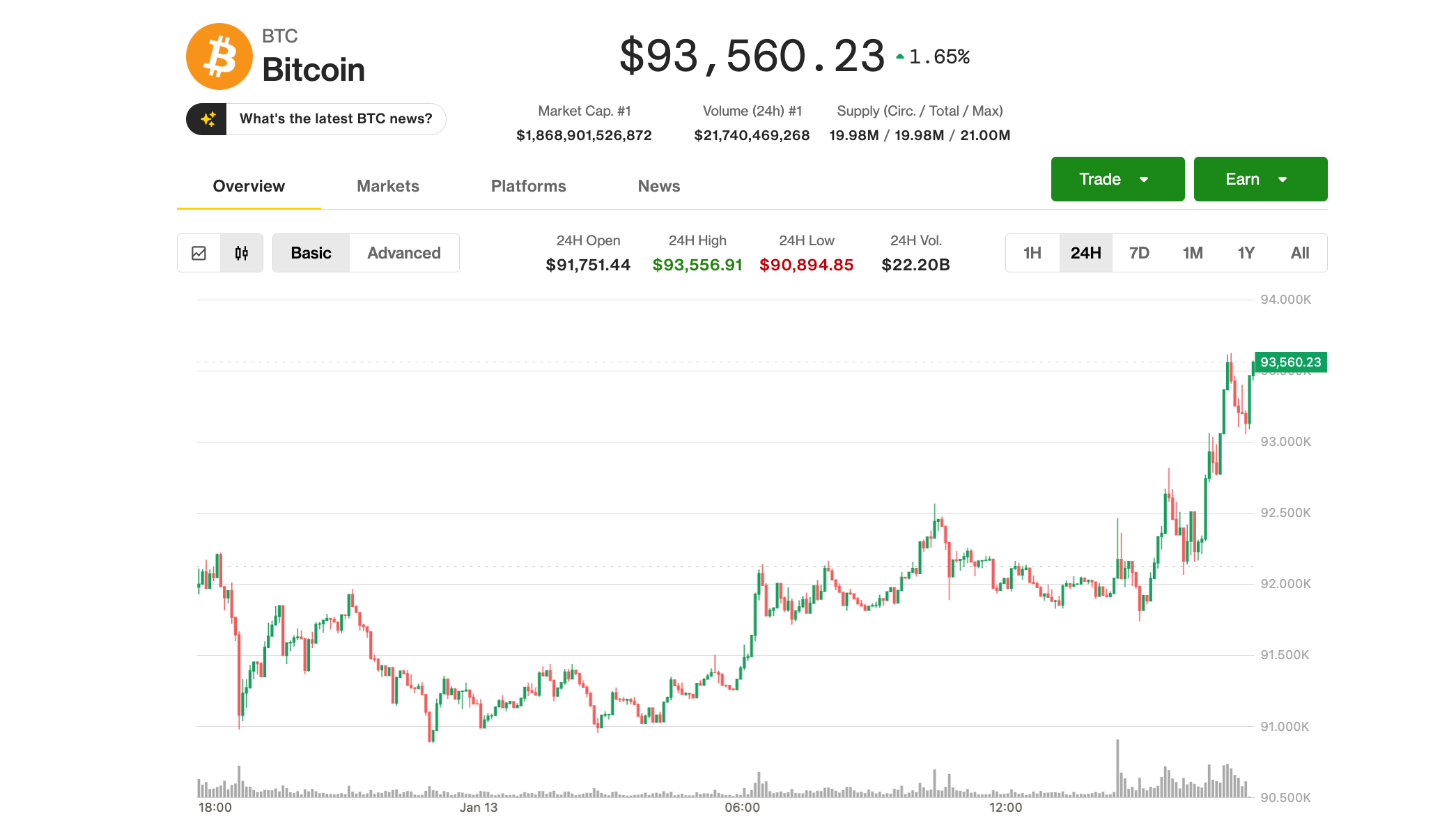
Bitcoin rallied above $93,000 after U.S. consumer prices rose 0.3% in December, increasing hopes for future Federal Reserve rate cuts. The cryptocurrency now faces a resistance zone near $93,500–$95,000, a key technical level traders are watching for a potential breakout or pullback.
Institutional flows supported the move: BlackRock reportedly moved about $300 million worth of Bitcoin and Ether to Coinbase Prime, signaling growing institutional demand and ETF-related activity.
3. Strive’s Acquisition of Semler Scientific Expands Bitcoin Treasury
Strive’s acquisition of Semler Scientific added 5,048 BTC to its treasury, bringing total holdings to nearly 12,798 BTC. Despite the addition, Strive shares fell about 12% on the news.
This move underscores a growing trend: public companies increasingly use Bitcoin as a treasury asset, competing with corporate peers like Tesla and Trump Media & Technology Group in cumulative holdings.

4. ETHGas Launches GWEI Token to Improve Ethereum Gas Efficiency
ETHGas introduced the GWEI token to address high Ethereum transaction costs and inefficient blockspace usage. The protocol aims to reduce “gas wars” and optimize throughput for DeFi and NFT activity.
If successful, this kind of innovation could improve user experience on Ethereum and help sustain its dominance in smart contracts and decentralized finance.

5. JPMorgan CFO Warns of Risks from Yield-Bearing Stablecoins
JPMorgan CFO Jeremy Barnum warned that yield-bearing stablecoins could form a parallel banking system without the same regulatory safeguards. He described such products as “obviously dangerous and undesirable” while noting JPMorgan plans to compete with crypto offerings in other ways.
This highlights the tension between traditional finance and decentralized finance (DeFi) as regulators and banks debate how to manage systemic risk from new stablecoin yield products.

Market Analysis: What the headlines mean for the cryptocurrency market
The current crypto market environment blends cautious optimism with regulatory uncertainty. Softer inflation data buoy hopes for future rate cuts, which can support risk assets like Bitcoin and Ethereum.
Institutional actions — including ETF flows and corporate treasury purchases — are significant. They suggest deeper liquidity and ongoing adoption, which can reduce volatility over time.
Conversely, legislative delays and vocal warnings from traditional finance leaders keep regulatory risk elevated. Market participants should monitor the Senate bill timeline and stablecoin policy debates closely.
Technological solutions, such as ETHGas’s GWEI, could materially affect Ethereum’s usability. Better gas efficiency would benefit DeFi, NFTs, and everyday users, strengthening Ethereum’s network effects.
Conclusion: Key takeaways for traders and investors
- Watch technicals: $93,500–$95,000 is a critical zone for Bitcoin.
- Monitor regulation: Senate timeline and stablecoin policy will influence risk sentiment.
- Follow institutions: ETF flows and corporate treasuries are key adoption signals.
- Track tech: Gas efficiency improvements could boost Ethereum activity.
Overall, the crypto market appears resilient, but volatility remains possible as legislation and macro data unfold. Stay informed and consider risk management strategies.
Call to action: Subscribe for daily crypto market updates and analysis to stay ahead of regulatory shifts, institutional flows, and on-chain developments. Subscribe now
FAQ — Frequently Asked Questions
Q: Why did Bitcoin surge above $93,000?
A: The rally followed softer-than-expected inflation data (0.3% in December) that increased hopes for Fed rate cuts, combined with institutional flows such as BlackRock’s large transfers to Coinbase Prime.
Q: What is the significance of the Senate crypto bill delay?
A: The delay increases short-term regulatory uncertainty. The bill’s final content and timing will shape market rules for exchanges, stablecoins, and custodial services, affecting institutional participation.
Q: How could ETHGas’s GWEI token affect Ethereum users?
A: If ETHGas successfully reduces gas fee volatility and optimizes blockspace, transaction costs could fall and user experience in DeFi and NFTs could improve.
Q: Are yield-bearing stablecoins risky?
A: Traditional banks and some regulators warn they could create banking-like risks outside the regulated system. Debate continues over how to balance innovation with consumer protection.
コメントを残す